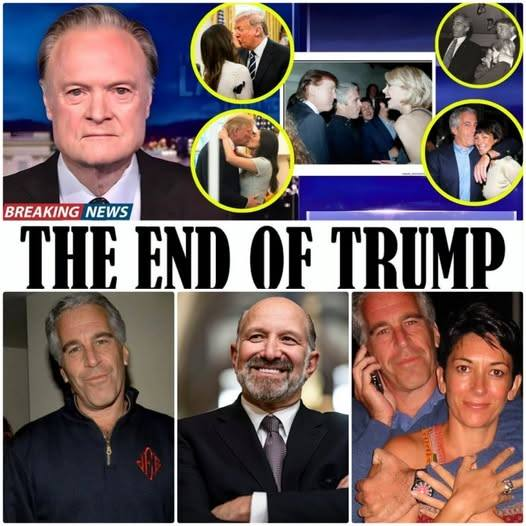
As the Department of Justice finally opened the vault on three million pages of previously hidden evidence, the carefully curated reputations of several high-ranking officials began to crumble. This isn’t just about the past; it’s about the integrity of the current administration and the figures who lead it.At the center of this storm is the House Committee on Oversight and Accountability, which recently engaged in a high-stakes encounter with Ghislaine Maxwell. Maxwell, currently serving her sentence as Epstein’s primary co-conspirator, did not provide the easy answers many hoped for, but her appearance served a different purpose.
She used the platform to signal a terrifying new reality for those she once called friends. By invoking her Fifth Amendment rights while simultaneously dangling the prospect of “clearing” certain individuals in exchange for clemency, she has effectively placed a target on the backs of the elite.
Investigative journalists who have followed Maxwell for decades noted that this is a classic power play. She has nothing left to lose, but those she served still have everything at stake.
The tension on Capitol Hill is palpable as lawmakers from both parties scramble to review the unredacted files within the strict 24-hour windows provided by the DOJ. For the first time, names that were once blacked out are being read in full, and the results are already proving to be politically fatal.
Perhaps the most significant casualty of these new revelations is Commerce Secretary Howard Lutnick. For months, Lutnick has maintained a safe distance from the Epstein scandal, publicly dismissing the financier as “gross” and claiming their interaction was a one-time occurrence.However, the unredacted files tell a drastically different story. Emails and schedules recovered by investigators show that Lutnick and Epstein were in contact as recently as 2018, nearly thirteen years after Lutnick claimed their association ended.
The documents don’t just show casual contact; they reveal a deep, interwoven professional and social relationship. They show plans for drinks in 2011 and, most damagingly, plans for Lutnick and his family to visit Epstein’s private island in December 2012.
Furthermore, signatures on legal documents prove that the two were investing in the same businesses simultaneously. This level of intimacy with a convicted sex offender is a far cry from the “one and done” narrative Lutnick attempted to sell to the American public.
The fallout was immediate. Representative Thomas Massie, a Republican known for his libertarian leanings, was among the first to call for Lutnick’s resignation.
Massie’s stance is particularly telling because it signals a bipartisan fracture. This isn’t a partisan “witch hunt”; it is a reaction to documented deception.
Democratic Senator Adam Schiff quickly joined the chorus, stating that Lutnick’s lies about his business dealings raise “serious concerns about his judgment and ethics.” Schiff’s demand for an immediate resignation reflects a growing sentiment that Lutnick’s position is no longer tenable.
Even House Oversight Chair James Comer, who has often been a staunch defender of the administration’s interests, has refused to rule out a subpoena for Lutnick. This suggests that the evidence in the Epstein files is so compelling that even political allies are finding it difficult to look the other way.
While the Lutnick scandal dominates the headlines, the broader implications of the unredacted files are even more concerning. The “slow creep” of Epstein’s legacy is beginning to touch various corners of the government, including the Department of Justice itself.
Lawmakers have expressed profound “discomfort” with how the Trump administration allegedly slow-walked the release of these files. There is a growing suspicion that the delay was not a matter of bureaucracy, but a deliberate attempt at damage control.
As the public watches this play out, a deeper crisis of confidence is emerging. Internal performance surveys and public sentiment data show a noticeable decline in trust toward organizational leadership in Washington.
People are beginning to realize that the policies and people they were told to trust are often shielded by layers of redaction and spin. When the promised transparency finally arrives, it often reveals a reality that contradicts everything the public was led to believe.
The discussion in Washington has shifted from policy to survival. Leaders are holding strategy meetings not to discuss new initiatives, but to assess how much more “worsening” the public will tolerate.
There is a recurring theme in these discussions: the margin for error has become dangerously small. When an administration is forced to manage a mounting pile of scandals while simultaneously trying to govern, setbacks compound.
This vulnerability is exacerbated when the economic reality for most households doesn’t match the rosy “messaging” coming from the top. For years, the argument has been that reducing oversight and regulation would lead to widespread savings and prosperity.
Yet, the data suggests otherwise. Independent studies consistently show that oversight and enforcement—the very things that might have caught Epstein or Lutnick sooner—actually generate strong economic returns.
Consumer protection, financial monitoring, and workplace standards provide a safety net that prevents the kind of systemic fraud and abuse we are currently witnessing. When these protections are stripped away in the name of “efficiency,” the costs don’t disappear; they are simply shifted onto the public.
This gap between the lived experience of the citizen and the claims of the politician is where trust goes to die. The Epstein files are a physical manifestation of that gap.
They represent the hidden truth that stays hidden until the pressure becomes too great to contain. Now that the lid is off, the question is no longer who was involved, but who will be left standing when the dust settles.
The meeting of the House Oversight Committee was intended to be a search for truth, but it became a mirror reflecting the dysfunction of the system. Maxwell’s silence was loud, and Lutnick’s emails were louder.
As we move forward, the focus will inevitably shift toward other names mentioned in those three million pages. Figures like Les Wexner, Richard Kahn, and Darren Indyk are next on the list for Congressional scrutiny.
The era of protected secrets is coming to an end, not because the powerful chose to be honest, but because the evidence became impossible to suppress. The “creep is coming for the creep,” and Washington will never be the same.
For those of us watching from the outside, the message is clear: transparency isn’t just a buzzword; it’s a requirement for a functioning society. Without it, we are left with a government of shadows, where the most important decisions are made in the rooms we aren’t allowed to see.
The release of the Epstein files is a painful but necessary step toward cleaning out the rot. It is a reminder that the truth has a way of surfacing, no matter how deep it is buried or how many redactions are applied.
As more lawmakers emerge from the secure viewing rooms with what they have seen, the pressure on the administration to act will become unbearable. The resignation of one cabinet member may just be the beginning of a much larger reckoning.
We are entering a period of intense public discourse and social media firestorms. The discussions on Facebook, X, and in the halls of Congress will be lively, heated, and ultimately, transformative.
Stay tuned as we continue to track the names, the files, and the fallout from the most significant document dump in recent political history. The story is far from over; in many ways, the real testimony has only just begun.

Leave a Reply