Introduction:
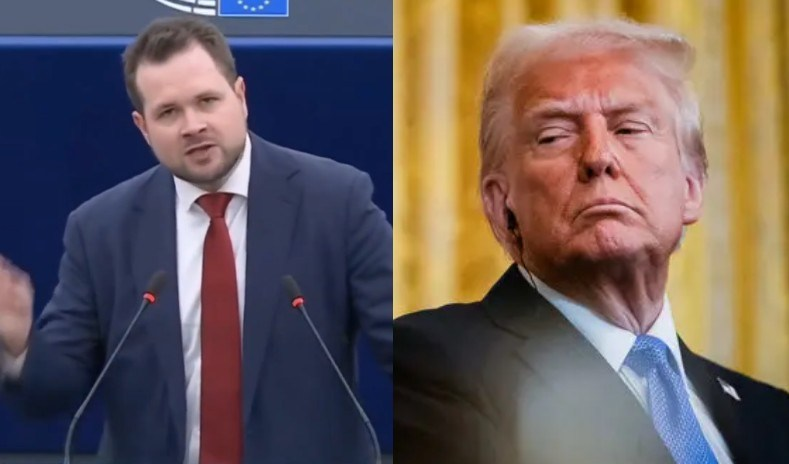
In the realm of international diplomacy, it is rare for political leaders to publicly express such raw emotion and unfiltered condemnation, especially in the context of a global leader like the President of the United States. But in a stunning moment at a European Union Parliament meeting, Danish lawmaker Anders Vistisen broke from his prepared speech and delivered a passionate and unrepentant message to President Donald Trump: “F*ck off.”
This remarkable outburst was directed at Trump’s ongoing threats to Greenland, a territory that Denmark has sovereign control over. The U.S. president, in his relentless pursuit of geopolitical ambitions, had floated the idea of purchasing Greenland, and when Denmark rejected the idea, Trump’s response was one of unprecedented hostility. Vistisen’s words came as a direct rebuttal to those threats, reflecting the mounting frustration and anger that many European leaders have felt in the wake of Trump’s reckless foreign policy and abrasive tactics.
While moments like these may have been unimaginable just a few years ago, they are becoming more and more frequent as Trump’s disregard for international norms and alliances grows increasingly evident. Vistisen’s choice to speak out in such a dramatic fashion is emblematic of the broader shift in how the world views the Trump administration—one that is characterized by arrogance, divisiveness, and an utter disregard for long-standing diplomatic protocols. In this article, we will delve deeper into Vistisen’s response, the implications of Trump’s approach to foreign relations, and the growing global resistance to his presidency. From Denmark’s public condemnation to the wider implications for U.S. foreign policy, this is a moment that signals a significant shift in international relations.
The Context: Trump’s Greenland Crisis
It all began with President Trump’s surprising interest in acquiring Greenland, a Danish territory located in the Arctic region. Initially, the idea was dismissed as a bizarre thought experiment, something that was more likely to come from an eccentric billionaire than a sitting president. But Trump’s repeated mentions of purchasing Greenland, followed by a formal invitation for Denmark’s leaders to discuss the potential deal, quickly turned what was initially a curiosity into a diplomatic nightmare.
The situation worsened when Denmark’s Prime Minister Mette Frederiksen firmly rejected Trump’s overtures, calling them “absurd” and making it clear that Greenland was not for sale. In response, Trump escalated the rhetoric, cancelling a planned state visit to Denmark, and lashing out in a manner that left the international community stunned. The mere idea that the President of the United States would threaten an ally like Denmark over a territorial dispute was unprecedented in modern diplomatic history.
Anders Vistisen’s Bold Response
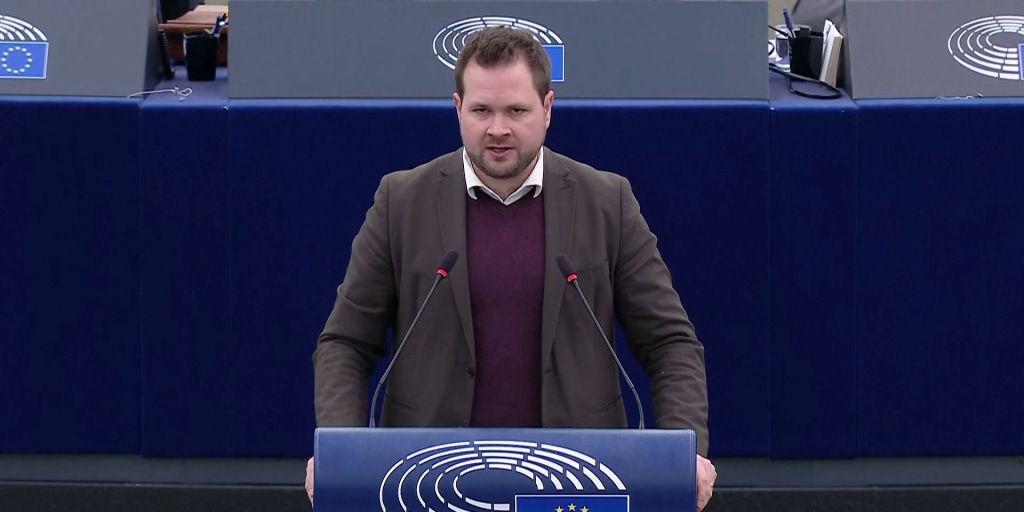
At the European Union Parliament, as the debate about Trump’s actions continued to simmer, Danish lawmaker Anders Vistisen stood up to voice his condemnation. Speaking in his native Danish, Vistisen initially addressed the broader concerns of the parliament, but midway through his speech, he switched to English to deliver a powerful rebuke directed at the U.S. president.
“I’ll say it in your language, President Trump—f*ck off!” he declared, sending shockwaves through the room. This wasn’t just a throwaway comment; it was a direct challenge to the American president’s actions and an open defiance of the way Trump was handling international relations. The fact that a European leader would publicly deliver such a harsh, unfiltered message was a sign of how far the Trump administration had pushed its allies.
Vistisen’s words resonated beyond the walls of the EU Parliament, quickly gaining traction across global media. His blunt and unapologetic response perfectly captured the frustration felt by many world leaders who had been on the receiving end of Trump’s bullying tactics.
The Changing Dynamics of International Relations
What makes Vistisen’s outburst so significant is the larger shift it represents in the dynamics of international relations. Under the Trump administration, the United States has moved away from the traditional norms of diplomacy, embracing an approach characterized by threats, demands, and ultimatums. Trump’s transactional view of foreign policy has led to strained relationships with long-standing allies and a growing sense of disillusionment on the world stage.
Historically, the U.S. has been a stabilizing force in global politics, using its influence to promote peace, economic cooperation, and diplomatic solutions to international crises. However, Trump’s presidency has seen a dramatic shift in this approach, as the president’s disregard for established alliances and norms has alienated countries that once considered America a reliable partner.
Vistisen’s words were not just a response to Trump’s actions—they were a reflection of how Europe and other parts of the world were beginning to view the U.S. under his leadership. What had once been a global superpower with a moral compass had become a nation led by a man who used power for personal gain and disregarded the long-term consequences of his actions.
Trump’s “Gangster” Tactics: A Bully on the World Stage
The comparison of Donald Trump to an “international gangster” was not made lightly. For many world leaders, Trump’s behavior on the global stage has been nothing short of erratic. His habit of using economic pressure, personal insults, and reckless rhetoric to get what he wants has created a diplomatic climate of fear and uncertainty.
Trump’s threats against Greenland were just one example of his “gangster” tactics. By attempting to buy a foreign territory, canceling diplomatic visits, and using tariffs as leverage, Trump was showing the world that he viewed international relationships as transactions to be bargained over, rather than partnerships built on mutual respect. For Vistisen, this was a dangerous precedent, one that undermined the very foundations of diplomacy.
The idea that Trump could treat foreign relations like a business deal—negotiating, coercing, and bullying other nations—was seen by many as a direct threat to the principles of international cooperation that have governed global politics for decades.
The “Hit Everybody with a Big Stick” Approach
Vistisen’s remarks also touched on a critical issue with Trump’s foreign policy: the shift from the traditional American diplomatic strategy of “walking softly and carrying a big stick” to a much more aggressive, confrontational approach. The phrase, originally coined by Theodore Roosevelt, referred to the idea of using diplomacy backed by the threat of force when necessary. It suggested a balance between diplomacy and power, with an emphasis on restraint.
Trump, however, rejected that balance. His “hit everybody with a big stick because we can” approach has polarized global opinion, alienating allies while emboldening adversaries. By using intimidation, tariffs, and threats of economic warfare, Trump’s America has been seen as an unpredictable and dangerous force, one that is destabilizing the global order rather than maintaining it.

The Consequences of Appeasing Trump
Vistisen was clear about the failure of appeasing Trump. He pointed out how, for the past several years, European leaders, including the UK and others, had attempted to placate Trump, hoping to avoid the wrath of his tariffs and political retribution.
Yet, as Vistisen correctly noted, this strategy of appeasement had failed. Trump had made it clear that diplomacy and respect for international law were not his priorities. For world leaders who had tried to navigate these treacherous waters by keeping Trump on their good side, the results had been disastrous.
The strategy of fawning over Trump, attempting to avoid confrontation by giving him what he wanted, had not yielded positive results. Instead, it had emboldened him and further destabilized international relations. Vistisen’s call for a new approach—one that involved standing firm against Trump’s bullying—was a reflection of the broader sentiment growing within Europe.
The Fall of the Special Relationship: Britain and America’s Worsening Ties
Vistisen’s words also pointed to the collapse of the “special relationship” between the United States and the United Kingdom. For years, the UK had been one of America’s most loyal allies, sharing not just strategic interests but also deep cultural and historical ties. However, under Trump’s leadership, that relationship had soured.
Vistisen highlighted how, only a year prior, Trump had praised the UK’s special relationship with the U.S. during a visit to Windsor Castle. But now, thanks to his unpredictable and hostile actions, the relationship between the two countries was in jeopardy. Trump’s willingness to undermine Britain through his tariffs and trade demands, combined with his treatment of their European allies, had caused irreparable damage.
For many in the UK, Vistisen’s words were a painful but honest reflection of the reality they had been unwilling to face: Trump’s presidency had tarnished the once-strong bond between the U.S. and the UK.
Europe’s Growing Resistance: A Unified Front Against Trump
Vistisen’s call for unity among European nations was perhaps the most important part of his speech. He recognized that the only way to confront Trump’s aggressive tactics was for European countries to stand together. Rather than bowing to pressure or appeasing the U.S., Europe needed to push back.
In this moment, Vistisen was calling for the re-establishment of a global order based on mutual respect, fairness, and cooperation. It wasn’t enough for individual countries to remain silent or placate Trump in the hopes of avoiding his wrath. Europe had to act collectively, standing firm against the economic and political bullying that Trump had unleashed.
The unity of European allies would send a powerful message not just to Trump, but to the world. It would demonstrate that nations could stand together in the face of adversity, fighting for their values and their sovereignty.
Trump’s Unprecedented Corruption: The International Toll of His Presidency
Perhaps one of the most striking aspects of Vistisen’s speech was his unflinching critique of Trump’s corruption. “He is the most corrupt president the United States has ever seen,” Vistisen declared, making it clear that Trump’s actions were not just harmful to America, but to the entire world.
Vistisen’s words resonated because they exposed the rot at the heart of Trump’s presidency. The financial dealings, the conflicts of interest, and the disregard for the law were all part of a broader pattern of corruption that had undermined the principles of governance, both domestically and internationally.
In Vistisen’s view, this corruption wasn’t just about politics—it was about moral leadership. Trump’s actions had proven that he would go to any lengths to enrich himself and his allies, even if it meant tearing apart international relations in the process.
The Global Reckoning: A Call for Accountability
Vistisen’s speech was not just a condemnation of Trump—it was a call for accountability. He argued that the time had come for the international community to recognize the dangers posed by Trump’s behavior and to take action. This wasn’t about partisan politics; it was about global security and the future of international relations.
The reckoning, Vistisen suggested, had to come not just from Europe but from the rest of the world. It was time for global leaders to stand up to Trump’s bullying and demand a return to diplomatic norms. His speech was a clarion call for change, and it set the stage for a broader conversation about how the world should respond to the erosion of international trust under Trump’s leadership.
The Role of Europe: A New Vision for Diplomacy
For Europe, Vistisen’s speech represented a turning point. The idea of standing up to Trump, of resisting his demands and refusing to be intimidated, was something that many European leaders had been reluctant to do. However, as Vistisen made clear, this was no longer a choice—it was a necessity.
The future of European diplomacy would depend on the willingness of leaders to stand united, to reject Trump’s bullying tactics, and to work together for the good of their people. It was a bold vision for Europe’s role in the world, and it was one that placed values like integrity, sovereignty, and respect for the rule of law at the forefront.

Conclusion: A Moment for Global Leadership
Vistisen’s fiery speech was a moment of reckoning for global politics. It was a powerful condemnation of Trump’s leadership, but it was also a call for unity, strength, and accountability. As the world watches, the question remains: will world leaders heed Vistisen’s call and stand together in the face of Trump’s recklessness?
The future of international diplomacy depends on the answers to these questions. One thing is clear—Vistisen’s words were not just a critique of Trump—they were a warning for the world to wake up, to stand firm, and to take action before it’s too late.

Leave a Reply